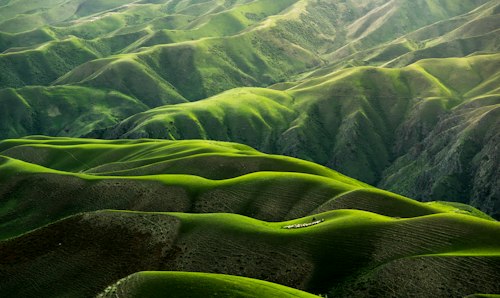
I get asked this a lot, and honestly there isn't a clean one-word answer. The Faroe Islands don't really have a bad season for hiking — that's the annoying-but-true part. What you're actually choosing between is a set of trade-offs: daylight versus crowds, mild temperatures versus wind that doesn't quit, puffins versus fog rolling in at the worst possible moment. Figuring out which of those trade-offs you can live with matters a lot more than chasing some mythical "perfect" month.
This guide breaks the year down by what you'll actually feel on the ground, not what a flight comparison site says. So instead of a generic "summer is best" line, you'll get enough detail to pick a window that fits the kind of hiking you're actually planning.
The short answer
Late May through early September is the standard window, and within that stretch, June tends to win out for most people. Days stretch past 19 hours of daylight, temperatures sit in a manageable 10–13°C range, and the climb up Slættaratindur — the highest point in the archipelago — is usually dry enough that you're not post-holing through mud the whole way up.
Month-by-month breakdown
| Months | Conditions | Best for |
|---|---|---|
| May | Cool, fewer visitors, still muddy underfoot | Budget travel, solitude |
| June | Long daylight, driest ground, mild wind | Multi-day treks, photography |
| July | Warmest, busiest, puffins active on cliffs | Birdwatching, coastal trails |
| August | Still warm, shorter queues than July | Balanced weather and crowds |
| September | Crisp air, early storms possible | Quiet trails, dramatic light |
| Oct–Apr | High wind, short daylight, ice on ridgelines | Experienced hikers only |
Why June edges out July
July gets all the attention because it's the warmest month, but it's also when cruise traffic and mainland European holidaymakers show up in force. Trails around Gásadalur and Saksun — already narrow in spots — can feel genuinely crowded by midday, which isn't really what you came for. June gives you nearly the same daylight with a fraction of the foot traffic. The light barely fades, so you can start a hike at 6am without a headlamp and still have the whole trail to yourself.
What the weather actually does
Even in the middle of summer, "sunny" here rarely means sunny for long — the islands sit right in the path of the North Atlantic, and it shows. Locals repeat this so often it's basically a cliché, but it holds up: pack for four seasons in one day, no matter what month you land. A real waterproof shell and trail shoes with actual grip will matter more than the calendar date ever does.
Wind is the real variable
Temperatures barely swing across the summer months, but wind speed is what quietly decides whether a ridge hike is a good day or a miserable one. Exposed routes like the climb to Slættaratindur can be closed in practice by gusts even when the forecast shows clear skies down at sea level. Checking a wind forecast the morning of a hike tells you more than checking a general weather app a week out ever will.
Avoiding the crowds without losing the weather
- Hike the popular routes — Lake Sørvágsvatn, Drangarnir, Múlafossur — before 8am or after 6pm in July; the daylight makes this an easy trade
- Base yourself on Eysturoy or Vágar instead of central Tórshavn so you reach trailheads before the tour groups do
- Swap the first week of July for the last week of August — near-identical temperatures, a fraction of the visitors
- Book any hike requiring a local guide permit (Drangarnir, Kalsoy) at least three weeks out in summer, they do fill up
The bottom line
If your dates are flexible, aim for the second half of June or the last two weeks of August. Both windows give you dry trails, wind you can actually work with, and a version of the islands that still feels like nobody's told everyone about it yet — which, for a place this small, is most of the point.
Frequently Asked Questions
Do I need to book hikes in advance?
For the free, unguided trails — Sørvágsvatn, Múlafossur, most of Streymoy and Eysturoy — no, you can just show up. A handful of routes cross private land and require a paid local guide or a booked permit, Drangarnir and Kalsoy being the main ones. Those are worth locking in a few weeks ahead in June, July, and August.
Is it worth hiking outside the May–September window?
Only if you're an experienced hiker who's comfortable with ice, short daylight, and trails that can close with little warning. October through April brings real wind and genuinely unpredictable conditions. It's beautiful in its own way, but it's not the season to learn Faroese hiking on.
How much rain should I actually expect in summer?
More than you'd guess from "mild North Atlantic climate." Some rain on most days is normal, usually in short bursts rather than all-day downpours. A good shell handles this fine; an umbrella does not, the wind will turn it inside out within minutes.
Can I see puffins and avoid the July crowds at the same time?
Mostly, yes. Puffins are reliably present from mid-June through early August, so the second half of June gets you birds without the peak-July traffic on the popular trails.