Somewhere around country sixty, checking off destinations started to feel less like travel and more like completing a list someone else had written. Slow travel — staying weeks instead of days, choosing one region over an entire country's greatest hits — reversed that feeling almost immediately once we actually committed to trying it.
What actually changes
You start recognizing the same baker on your walk each morning, the same bus driver on the route you've taken a dozen times now, the same regulars occupying the same seats at the corner cafe you've adopted as your own. Places stop being backdrops for photographs and start being somewhere you briefly, genuinely lived, with a rhythm and a set of small routines rather than just a checklist of sights.
One month in a single Portuguese town taught us more about actually living somewhere unfamiliar than three months of fast-paced, country-a-week travel had managed the year before. We learned which bakery sold out of the good bread by 9am, which square had shade in the afternoon and which didn't, which neighbor's dog would bark at us every single morning regardless of how many times we'd already walked past.
The trade-off, honestly
You'll see fewer places. That's the entire point, and it's worth stating plainly rather than dressing it up as something else — slow travel means deliberately choosing depth over a longer list of stamps in a passport. If your goal is maximizing the number of countries visited in a given year, this approach will actively work against that goal, and there's no reframing that changes the basic math.
How the budget actually works out
Somewhat counterintuitively, slow travel often costs less than the fast version, not more. Monthly apartment rentals frequently undercut the per-night cost of a week of hotel stays, and cooking even half your meals at home rather than eating out for every single one adds up quickly over a longer stay. The savings on flights alone — one arrival and one departure instead of six of each across a month — made a real difference to our overall budget.
What we learned about ourselves
The version of slow travel that worked for us wasn't purely passive, either — we still hiked, still visited museums, still did the touristy things worth doing in any given place. The difference was pacing: doing two things a day instead of six, and leaving enough unstructured time that the place itself, rather than a schedule, could dictate what happened next.
Does it work for shorter trips too?
Yes, at a smaller scale — the same principle applies even on a standard two-week vacation. Picking one region instead of trying to cover five cities in fourteen days changes the character of the trip considerably, even if it's nowhere near the scale of a month-long stay. We've applied this same thinking to shorter trips since, and it consistently changes what we remember afterward.
It's not the only right way to travel, and we don't think it should replace every trip going forward. But it's the pacing philosophy that changed how all four of us plan every trip we've taken since first trying it.
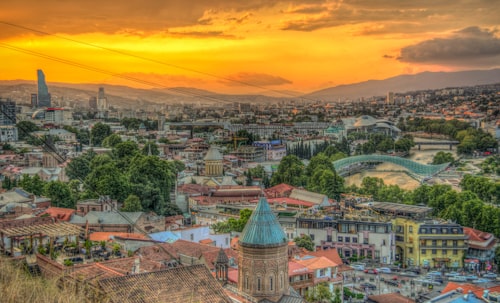
If this kind of trip appeals to you, you might also like our Georgia backpacking itinerary, built around this pacing and practical tips for traveling solo at a slower pace.
Frequently Asked Questions
Is slow travel more expensive than fast travel?
Often less — longer stays mean fewer flights and access to monthly accommodation rates, which usually offsets the extra time.
Does slow travel work for a two-week vacation?
Yes, at a smaller scale — picking one region instead of five cities applies the same principle even on a short trip.
Is slow travel only for long-term nomads?
No — it's a pacing choice anyone can apply, whether the trip is two weeks or two years.